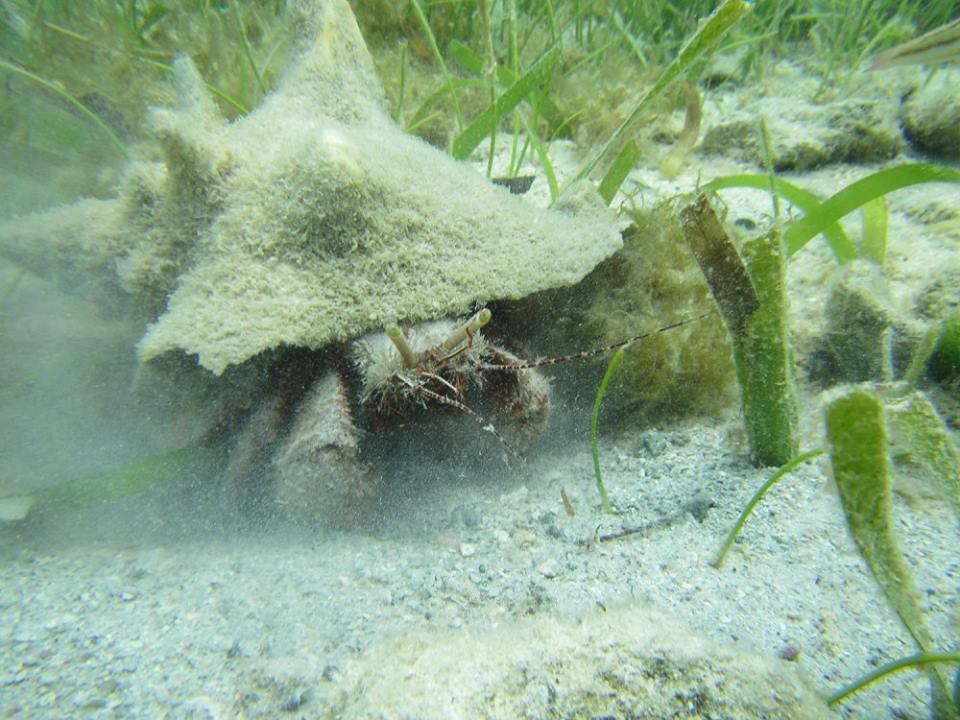
Darwin noted, "...by far the most remarkable feature in the natural history of this archipelago...is that the different islands to a considerable extent are inhabited by a different set of beings...I never dreamed that islands, about fifty or sixty miles apart, and most of them in sight of each other, formed of precisely the same rocks, placed under a quite similar climate, rising to a nearly equal height, would have been differently tenanted (Voyage of the Beagle, 1937)." Based on quotes like these, I had always pictured a wide variety of wildlife with minimal differences in the landscape. I think the thing that I was most surprised by was the wide variety of habitats, even within a single island.

One of the first areas of observation was the harbor. After first arriving, a group of us sat outside to grab lunch and we watched as the locals as they sold the days fresh catch while a brown pelican and Galapagos sea lion hung out waiting to pick up the scraps and huge frigate birds flew overhead. This was an excellent example of how humans integrated with wildlife. A collection of colorful boats were lined up along the coast and more sea lions swum under and around them. Walking through most of the city and the hike to the Darwin Research Station, an area just inland of the coast was a good example of the Arid Zone with plenty of cactus and other hardy plants.


 On yet another excursion, we visited the hypersaline lagoons on Isabela Island, home of the endemic Galapagos flamingos. Again, this habitat was completely different than anything we had seen on other parts of the trip (also exciting is that this photo won Project Dragonfly's photo contest in the panoramic category, and since I do not consider myself a photographer, I think this speaks volumes to the natural beauty of this habitat).
Later, after the class ended we took a trip to Las Grietas or the crack where we enjoyed snorkeling a new underwater habitat, a brackish water area that was fed by an outlet to the ocean as well as fresh streams. On the hike there we passed Salt Marshes, where locals harvest salt that is used for preserving fish, and even though this high salt area was similar to the lagoon on Isabella Island, it was still also quite distinct.
 Another trek led us to the Tintoreras islets which showed us another habitat and gave us a window into what the early colonization of the Galapagos might have looked like. This area was almost entirely ah ah (fast cooling) lava. The white covering the rocks isn't just bird droppings like I initially imagined, but is actually lichen which breaks down the lava rock into soil that is suitable for other plants. Lava lizards and marine iguanas scurry over the jagged formations and a few mangroves are early colonizers.
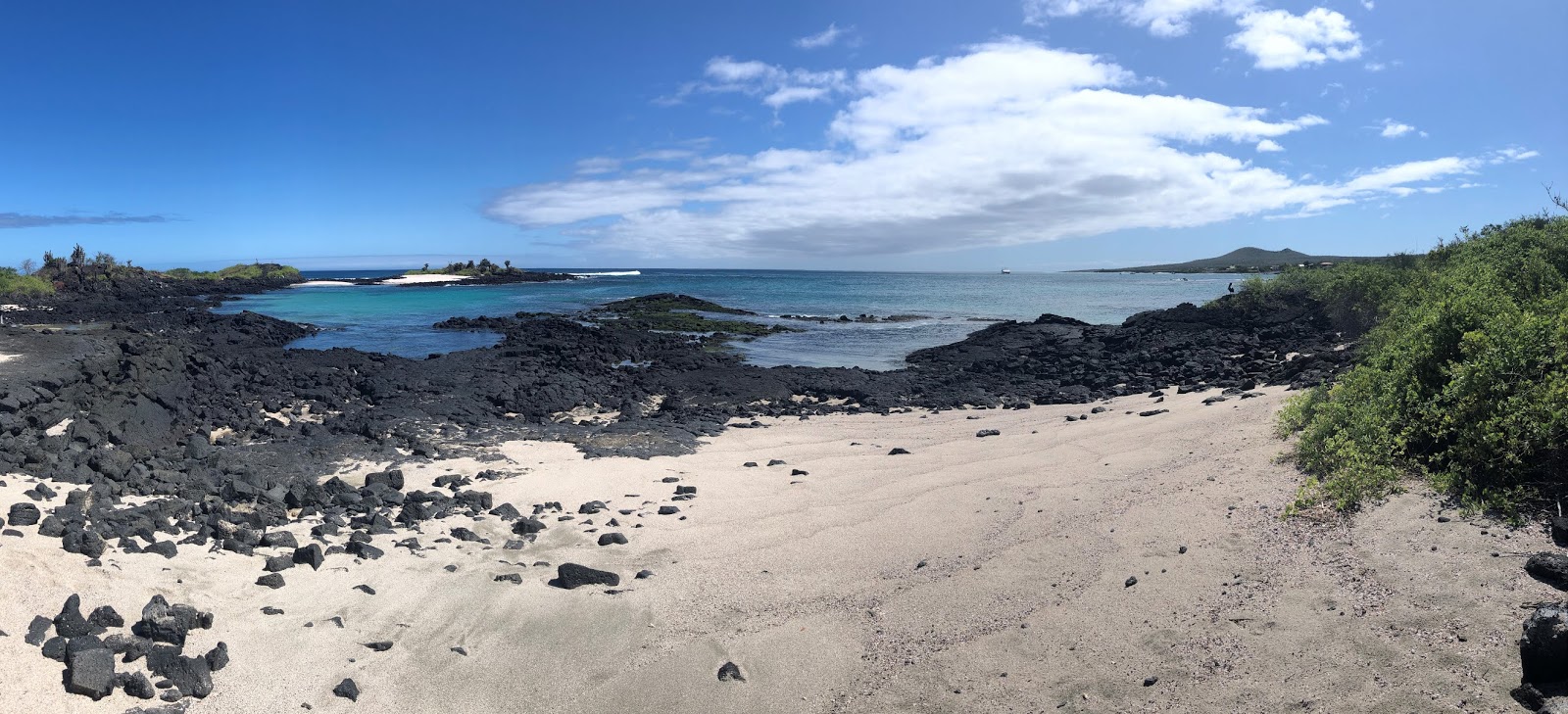 The Littoral or Coastal Zone is the habitat along the water's edge. Unlike many areas where the plants are selected for based on climate, the plants here are characterized by their salt tolerance (Jackson, 1993). Mangroves line the coast providing soil stabilization and shelter. While we were snorkeling we watched a variety of small fish hiding in the propagules of the red mangroves and on land we saw marine iguanas hanging out in the mangrove's shade. But even the look of the coast changes from island to island and from beach to beach. On Santa Cruz we were out on the beach at sunset when we joined the Mola Mola group for their sea turtle nest surveys and this beach had light-colored sand while later a group of us traveled to Floreana Island and one of the beaches we passed had a similar light sand while the next had a dark sand that looked like it was made more from the lava rock. The beach on Santa Cruz also seemed to have more vegetation while Floreana had more lava rock along the coast.
Even in scanning over the photos I wanted to use for this post, I feel like it would be easy to assume that each of them came from a completely different location, and yet, these are all photos from my amazing Galapagos journey. Of course, nothing can compare to getting to see a Galapagos Tortoise in the wild, but I was surprised to find how many different habitats are contained on a tiny set of islands of the West coast of Ecuador and how much I enjoyed seeing the variety of landscapes. The staggering number of panoramic pictures I took seemed like a good indication that the scenic beauty of the different ecosystems was a good topic to share with others.
References
Darwin, C. (1937). Chapter XVII: Galapagos Archipelago. In the Voyage of the Beagle (pp. 376-405). New Yourk City, NY: P.F. Collier & Son Corporation.
Jackson, M. H. (1993). Galapagos, a natural history. University of Calgary press.
by Lindsay Mayer




 lived in Madison. That's partly because all of the runs happen to be on days that I work but I was finally able to make one. The extra motivation came from it being Halloween themed (glow in the dark t-shirt - yay!) and it sponsors the Nature Conservancy. It started and ended in Nance Park in
  then I got it in the mail and took one look at it and instantly disliked it. Devin, being the understanding and wonderful husband that he is returned it for me. That was before the screen started blanking out. The black screen gave me the extra motivation to actually get and keep a new laptop. I found one I liked for only $330 at Best Buy and bought it from the store on my way to Zumba. It's a charcoal gray 15.6" display HP with AMD E-Series Processor and 3GB memory. When I got home I turned it on and there were green lines going through a blue screen of death. I turned it off and on again and it did the same thing. Today I took it back to Best Buy and exchanged it for a working computer. Now I'm working on installing all of my programs, software, etc. I haven't come up with a name for this laptop yet but I'm still working on it.
 the tickets were a wedding present (which is why they were under Julie's name) and the lady gave us buttons that said, "Happily Ever After." The first thing we did we go to look at the Tree of Life which I love; I wish I could have one in my backyard. I've often thought it would be neat to have a tree of life tattoo. Then after not too long we were off to the Lion King show. The singing was really good and they had acrobat "monkeys" which were fun to watch. I still remember a lot of words from all of the
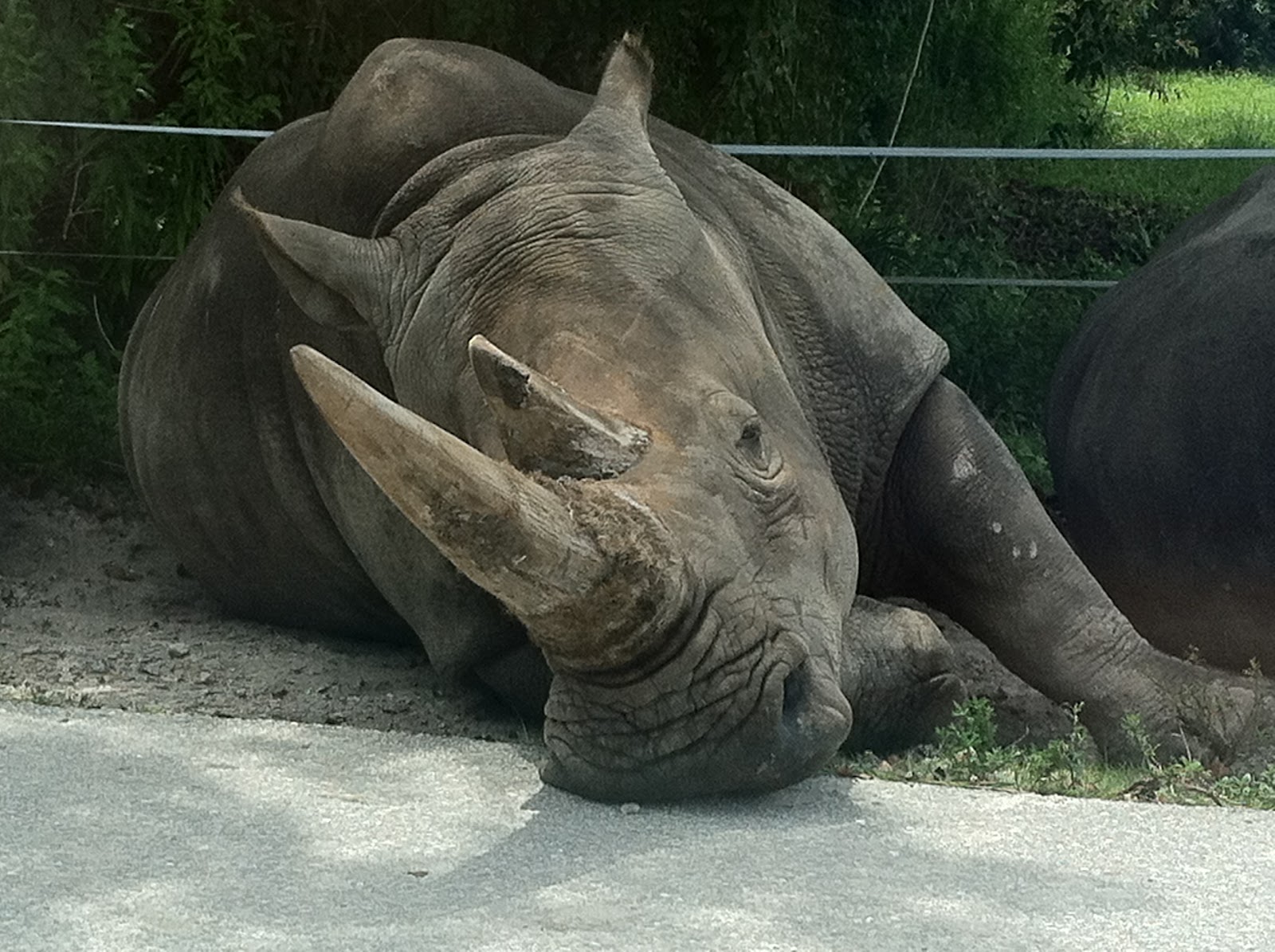
 songs even though it's been awhile since I've seen the movie. After the Lion King we headed over to Africa and went on the Kilimanjaro Safari where we saw lots of animals including some giraffes that came pretty close and a baby elephant. We also went on the Pangani Forest Exploration Trail, visited the Conservation Station, saw the Flights of Wonder show where I got to go onstage and have an owl fly over my head, and I even got Devin to go on the Expedition Everest - Legend of the Forbidden Mountain roller coaster with me. The Flights of Wonder show was probably one of my favorites because when they asked for a volunteer with a camera they picked me and I had to try to take a picture of an owl as it whooshed right over my head. Unfortunately I didn't get the picture but it was still really neat. For dinner we left the park and headed to the African buffet that is located in one of the hotels. All of the food was delicious and I ate way to much. Especially since after I had already stuffed myself our server noticed we had our "Happily Ever After" pins on and brought us a special dessert plate which we couldn't even finish. All in all it was an awesome day and it was so nice to have some uninterrupted time with Devin.
 that uses Muppets, and of course I love all things muppets. There were juggling bunnies,
  I am still trying to kick the end of my month long sinus infection but we spent the afternoon in Orlando. First we headed to Ripley's Odditorium where we saw fertility statues from Africa (supposedly if you touch them you will get pregnant - I did not touch them), a 25 foot high mural of Jimi Hendrix made out of over 8,500 playing cards, a replica of Wall-E made entirely out of
 car parts, a rare fossil of a T-Rex lower leg, and of course a shrunken head. Devin's favorite part was all of the weird animals (sheep with two head, cows with too many legs, etc.) and my favorite part was the sculptures made out of parts.
 normally look like the picture because normally there's stuff scattered all over the place but it's hard to admire the new furniture when it's piled under books, papers, and laundry. Under one of the end tables we have a vase from the wedding filled with the shell and kakui nut leis we got in Hawaii and under the other table we have a piece of pottery we got in Nicaragua. The "painting" over the couch is a picture we took of boiling mud in Nicaragua that we had printed on canvas. We are planning to add two smaller pictures on either side of it from our other adventures.
 later I finally am. We left first thing in the morning and made it there in time to meet up with my team for lunch. Only Denise and Pam were able to come but I did get to see Javi as well. It was great to catch up with them and hear how things were going. The team just finished getting up all of their ambulatory clinics, yay! Both Denise and Pam got married (and so did I) and I got to see some of their wedding pictures. Pam even gave me a mouse pad with their logo